
Portfolio
Here you’ll see examples of some of my client deliverables that have been redacted or are not considered confidential.
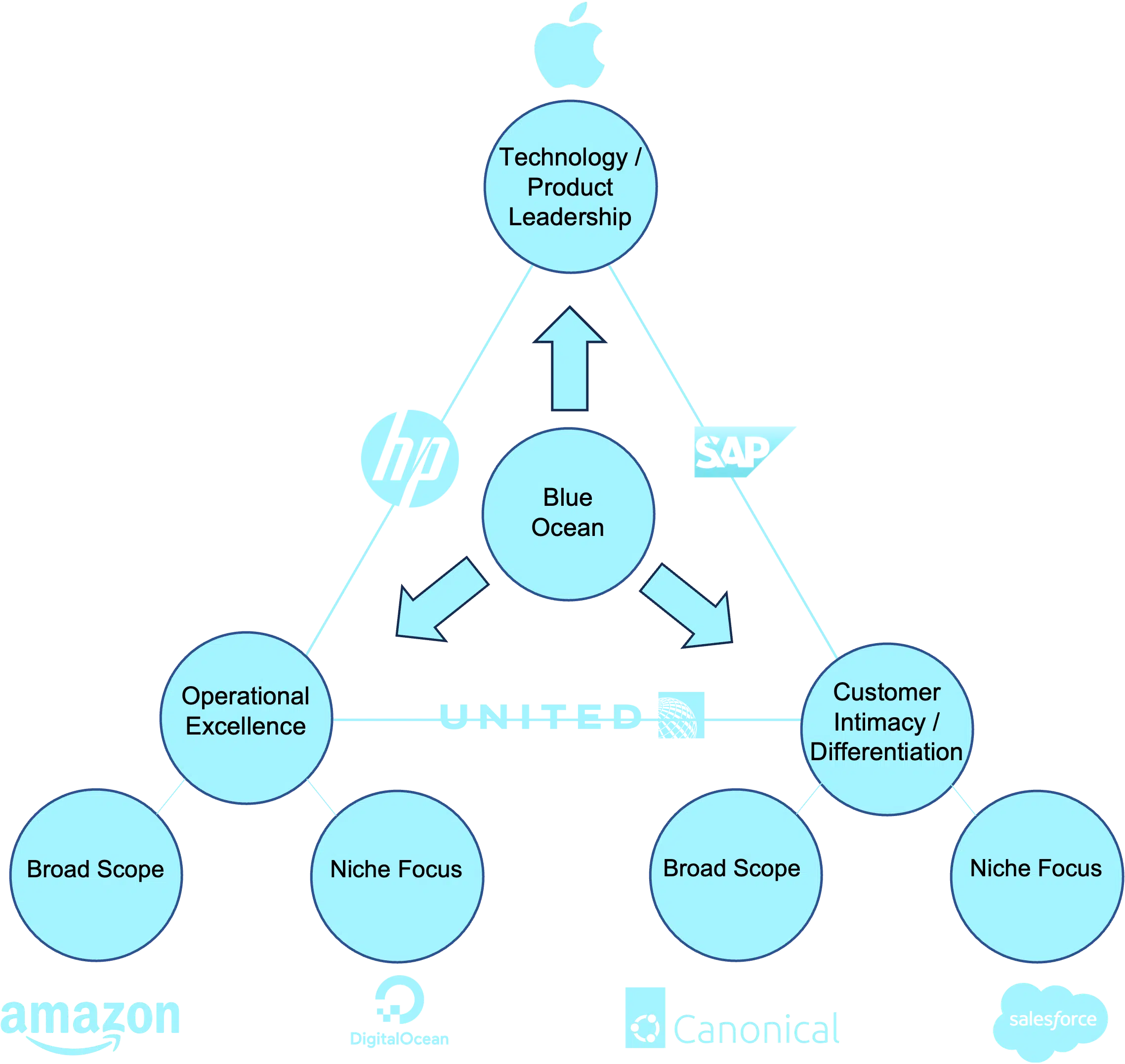
Strategic Position Diagram
↓














Examples of My Work
Business Plan Economic Model
This Economic Model was developed as a companion to a Business Plan I wrote for a client. This version was designed to be investor-facing to be placed in the investor “deal room” for due diligence.
The client’s name has been redacted from the screenshots shown.
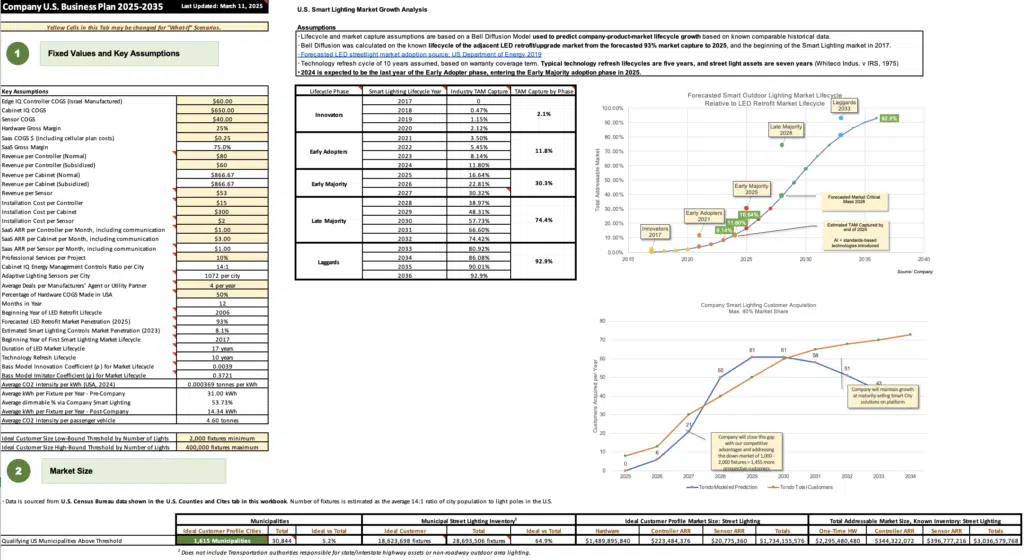
Economic Model
This is a business plan I developed for the investor deal room raising capital for a client’s North American market entry.
The plan was designed for different types of PE investors including PE funds focused on climate impact KPIs such as carbon footprint savings.
It was also designed to walk investors through in a linear sequence with clear descriptions for each section of the plan to speed up an investor’s due-diligence process.
Economic Model
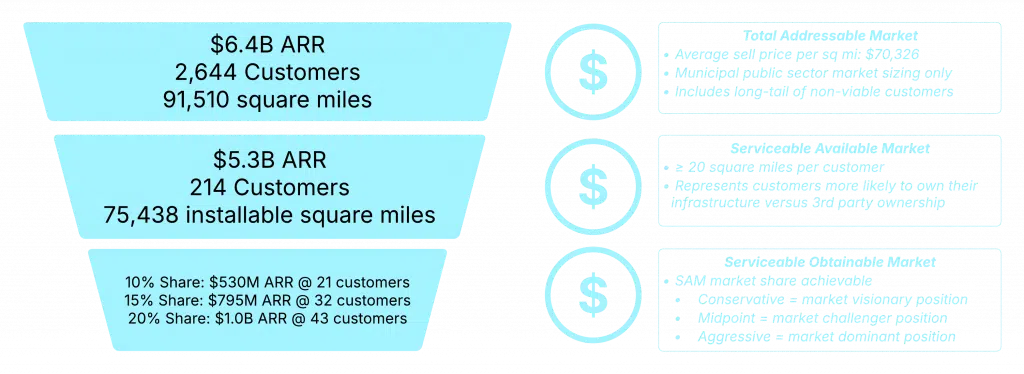
This funnel chart shows the presentation of:
- Total addressable market (TAM) – where can you deploy?
- Serviceable addressable market (SAM) – who are the viable customers?
- Serviceable obtainable market (SOM) – what market share can you reasonably obtain?
Including all three describes a clear picture for investors.
Economic Model
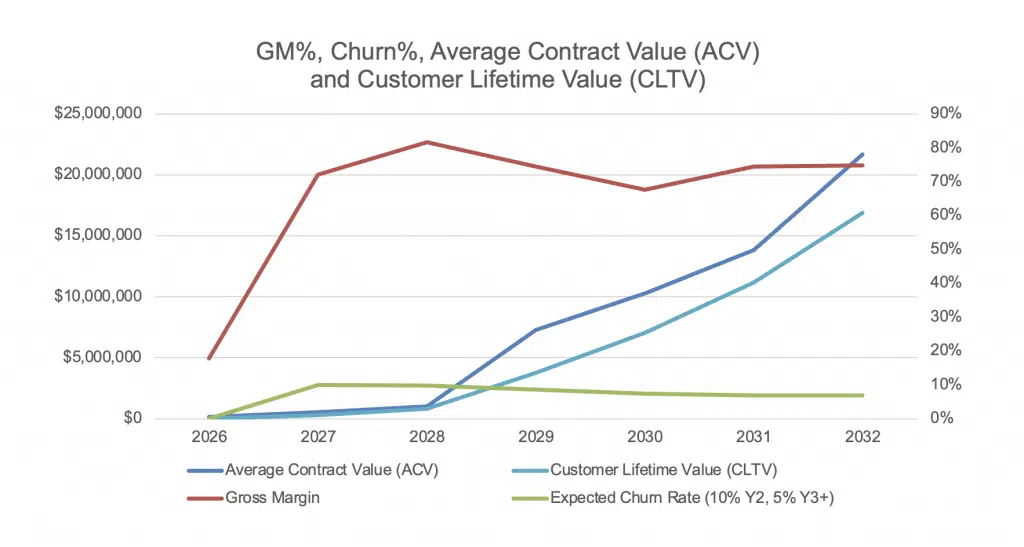
Tracking your unit economics can help you monitor the improvement in your business. Describing them in your business plan will help investors understand the value of your business model:
- Average contract value (ACV)
- Customer lifetime value (CLTV)
- Gross margin %
- Churn rate %
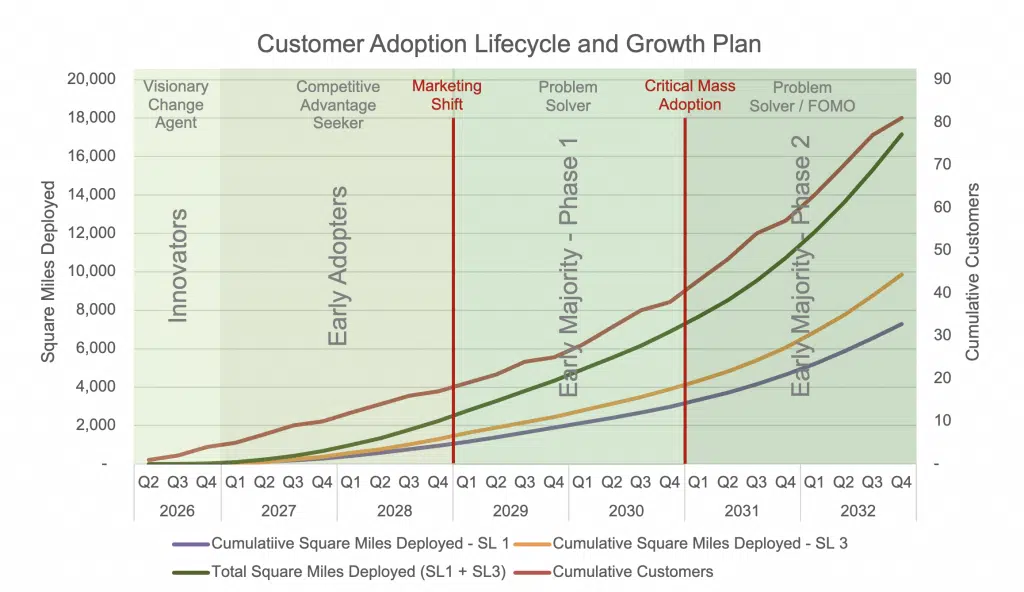
Economic Model
I developed this customer acqusition and growth model and mapped it against Rogers’ Diffusion Model for predicting technology adoption lifecycles when selling to early-stage customers with peer social influence.
This helps investors and the sales & marketing teams understand how the company needs to adapt to different customer personas through each stage of growth.
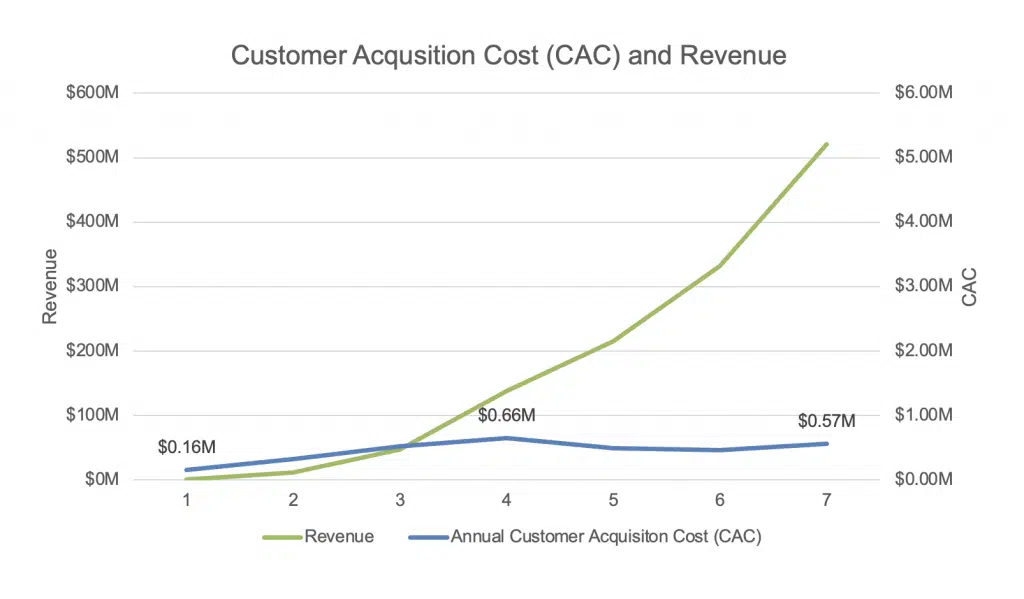
Economic Model
How do you know your business model scales?
Scale is simply a metric of size. Scalability is the measurement of how your revenue grows against your Customer Acqusition Costs (CAC).
The degree to which your revenue grows against your CAC growth determines your scalability. This is a must-have KPI in your operations and investors will want to see it in your business plan.
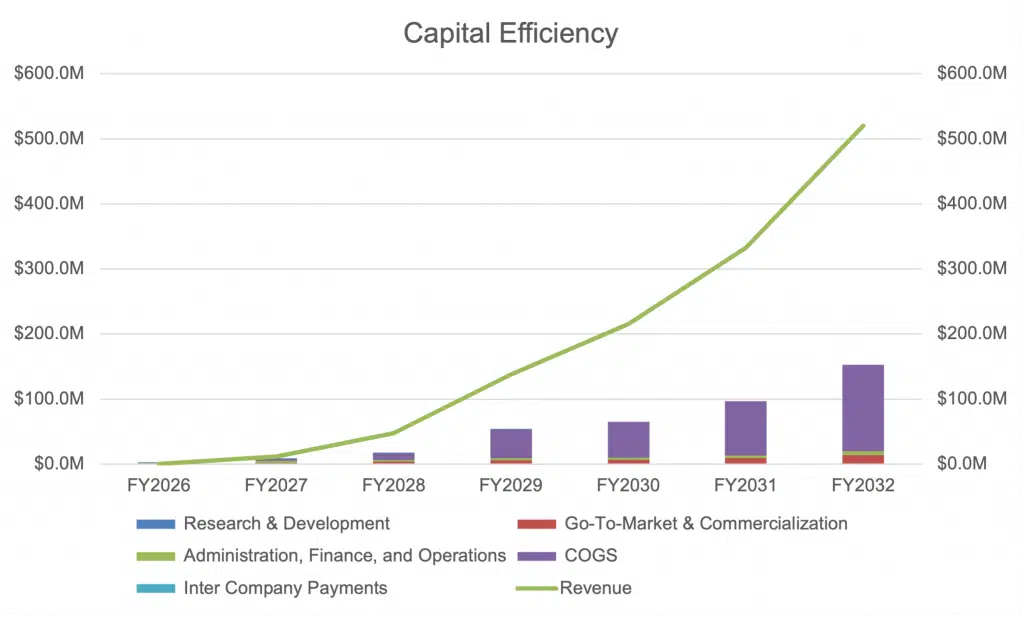
Economic Model
Investors will want to see how efficient your use of funds is, and where those funds will go:
- General & administrative overhead
- Research and development
- Sales
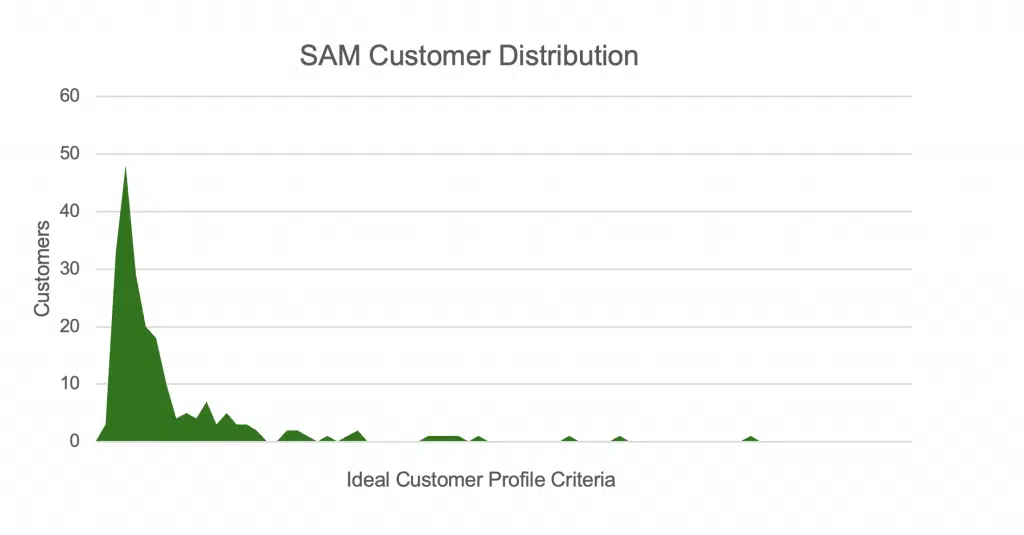
Economic Model
I always check what the Serviceable Market (the competitive landscape) distribution looks like when I develop an ideal customer profile for each stage of maturity:
- Where is the market concentrated?
- Where should we focus our efforts for each stage of maturity?
- Where are the big logo reference customers?
- Where should we avoid wasting our time?
↑ Select images to expand ↑
New Markets, Products, and Value Drivers
Cost-Benefit Model for Municipal Streetlighting
- Three new vertical market sectors for a CRM vendor
- A competitive advantage of 40 percent greater operational cost reduction than the market-leading competitors in roadway lighting control
- A method of fusing edge-compute data to reduce false-positive sensor detection from 20 percent to <1 percent
- A method to detect copper wire theft with a software update to an existing product
- An 18 percent reduction in total municipal electricity usage and carbon footprint
- Industry-leading cybersescurity value proposition for Smart City IoT
- Two new vertical market sectors for a shift-scheduling software vendor
- A strategic market position with reduced competitive intensity for a remote contract software development services company
- Defining the strategic market position for a new drug therapy that led to the IPO of a NASDAQ-traded pharmaceutical firm
Website Design & Development

↑ Select to view website ↑
I designed, developed, maintained, and created all of the content for this client’s website for Smart City IoT solutions.
The site runs on WordPress and I used the Divi CMS for building the site.
The challenges with this project were:
- The client’s market was at an early stage in the maturity cycle, and required education on the core value propositions
- The client’s competitive advantages are rooted in complex technologies that include IoT, cybersecurity, and artificial intelligence that had to be translated into business value messaging for executive buyer personas, and technical key stakeholders
- There was no pre-existing content that was re-usable
- The client is a public company and a high-value target for cybersecurity threats
There are about 900 lines of custom CSS and Javascript in the site. It is designed to be responsive across any device or display size. It is integrated with the company’s CRM for lead generation forms, and has a fully-configured Google Analytics dashboard for monitoring visitor demographics and activities and measure content performance and lead generation outcomes.
Site traffic, search click-through, and content engagement are up over 1,500% year over year as of February 2026.
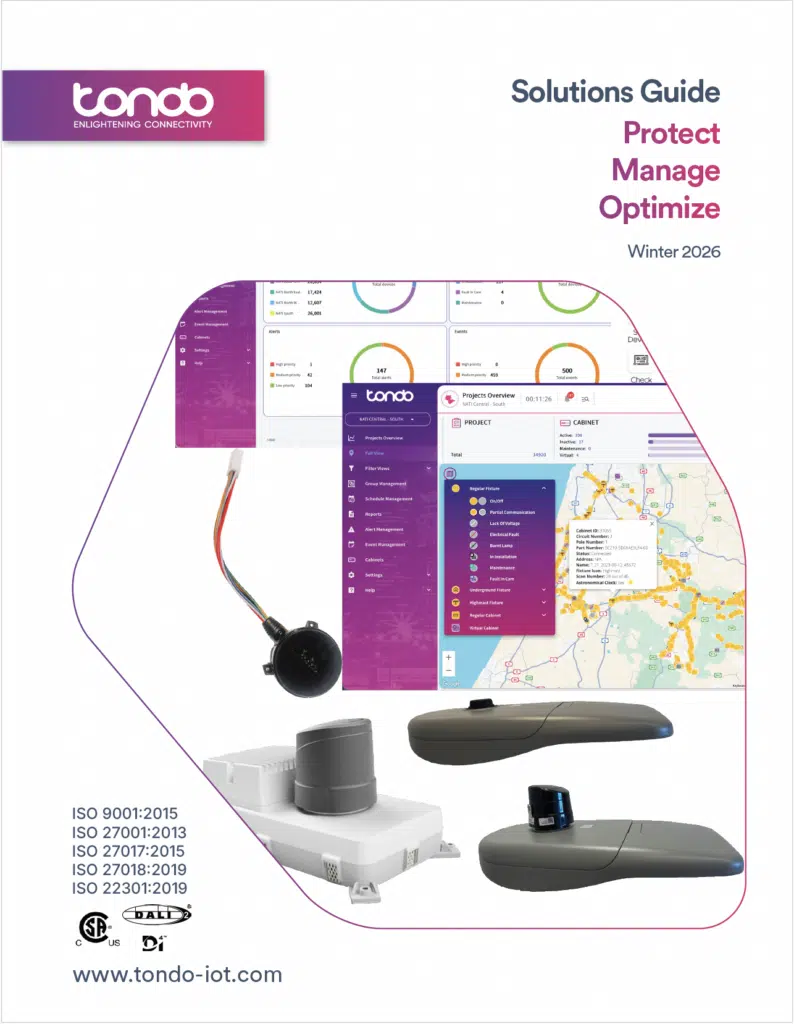
Product Catalog Design
Some of the challenges involved included:
- Developing a deep understanding of the technologies used in the company’s products down to the component level
- Working with the development team to extract technical specifications where available
- Extracting technical specifications for OEM products from supplier documentation
- Creating wiring diagrams from development team and OEM product documentation
- Developing branding design and layout
- Developing value propositions and marketing narratives
- Developing competitive comparison chart from competitors’ marketing materials and documentation
Features include:
- Hyperlinking table of contents to sections
- Creating reusable categorized media library to enable team-based maintenance and readability
- Structured formatting for scalability with new products
↑ Select to open document ↑
Municipal Public Tender Scoring Analysis
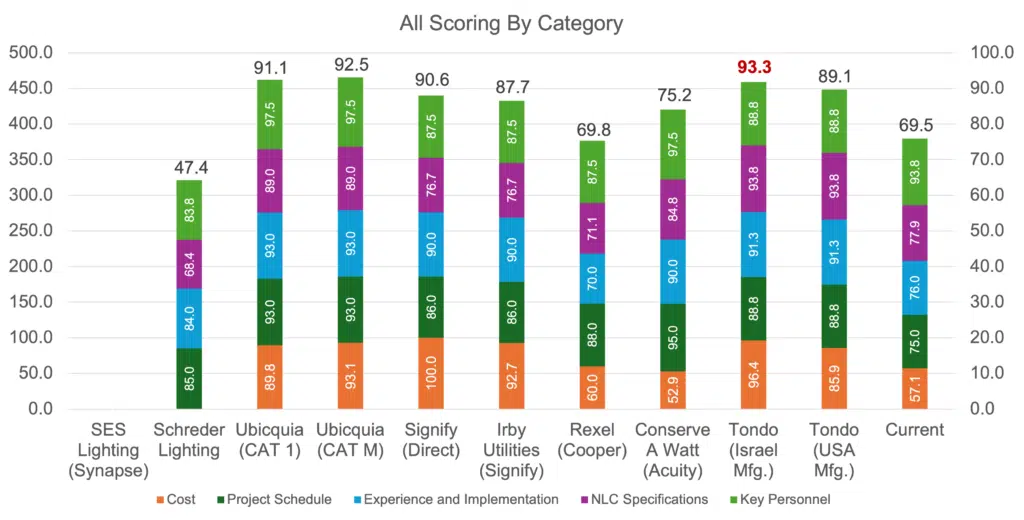
Public Sector Bid Scoring Analysis
This was a bid scoring analysis I did after I wrote and submitted an RFP on behalf of a client.
I had predicted a win, and was surprised that we had not been invited to the short-list bidders meetings, or had received the award.
I submitted a freedom-of-information request to collect all of the city’s bid scoring data, and my analysis showed that we had the top-scoring bid.
After negotiations with the city and their legal team, we accepted a significant monetary settlement and an admission that the city had failed to properly award the bid.
Relative Competitive Analysis
This is a weighted competitive analysis I did for the business plan I wrote for an overseas client to prepare them for North American market entry.
In this case, I researched and segmented over 100 global market participants and narrowed the field down to those who had shown indications of North American market activity, or indicated plans to enter the market.
The objective was to demonstrate the viability of the client competing against existing market entrants.
Over 100 feature attributes, together with geographical scope, and market/sector scope were collected, weighted against expected customer impact, and summarized in this chart.
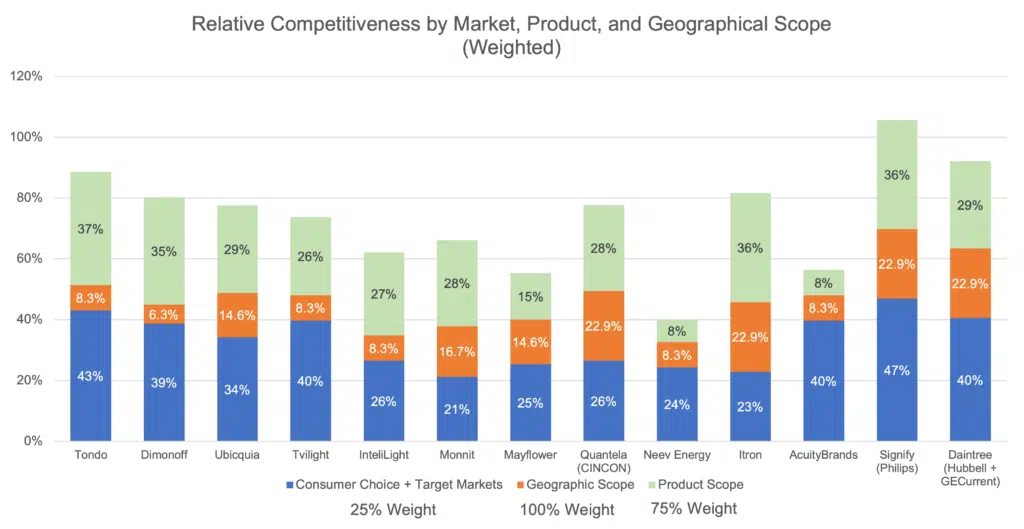
Weighted Competitive Analysis
GIS Sensor Pricing & Deployment Model
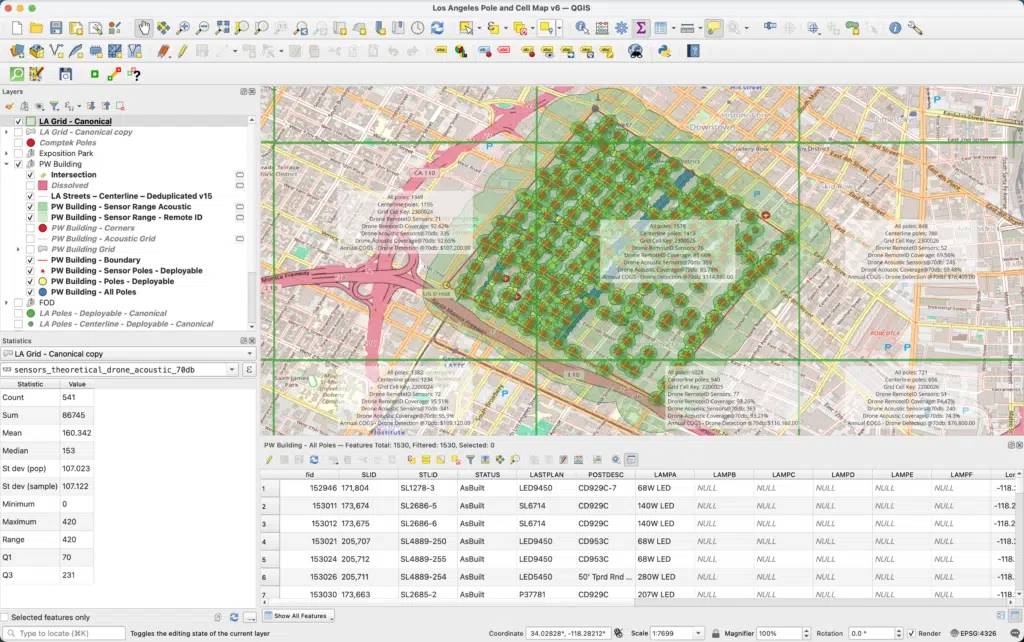
GIS IoT Sensor Pricing and Deployment Model
This is a a GIS (Geographic Information System) model developed originally to prove the assumptions in a business plan for a new U.S. company competing in the public safety threat detection market.
The client’s business involves deploying RF and acoustic sensors on municipal streetlight infrastructure in order to detect registered and unregistered drone activity in urban areas, and detect ground-level threats such as gunshots, glass breakage, aggressive voices, and other events for dispatching first responders.
The outcome of this model was:
- It proved that the underlying assumptions in the company’s financial plan under-estimated the COGS to deploy a SaaS per-square-mile pricing model by 4.5 times
- It showed that there was a significant variance due to roadway and streetlight density across a city
- I evolved it into a deployment planning and price quoting model by merging COGS data
- I enabled it to adapt to pre-set zones as well as customer-specified areas of any size to quickly provide tailored-to-fit feasability, roadway and area coverage, and pricing data to ensure all projects were profitable
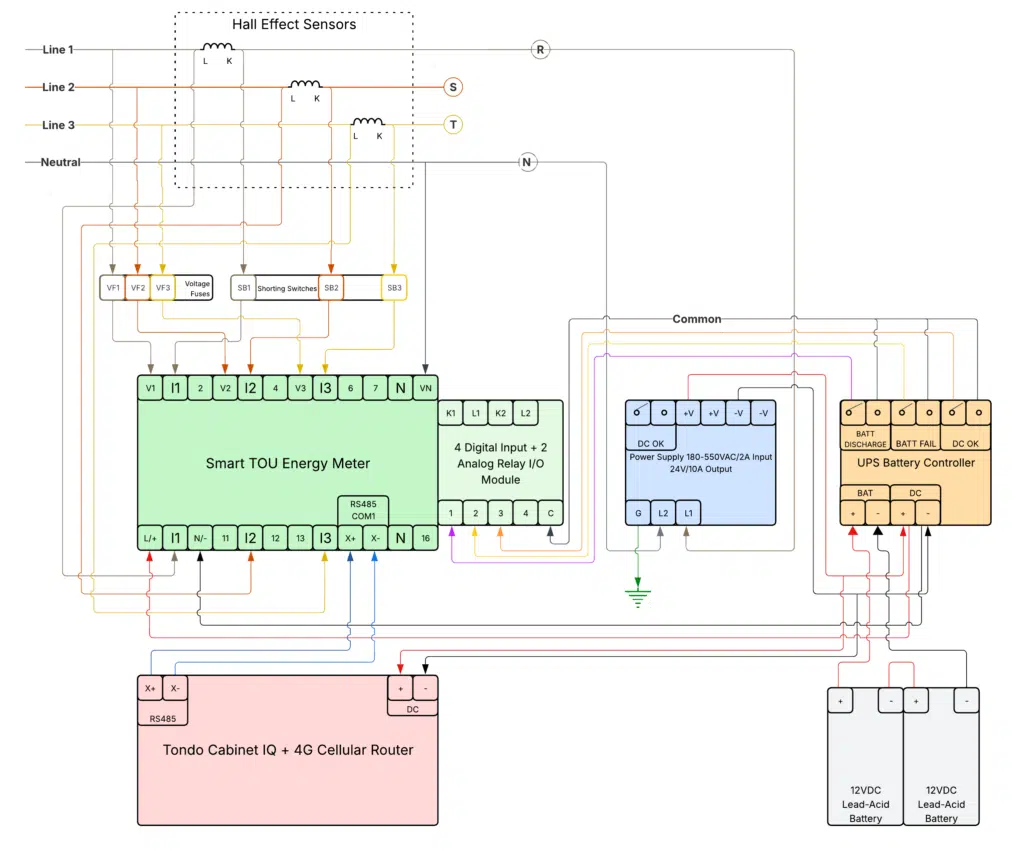
Streetlighting Cabinet Controller Wiring Diagram
This is a wiring diagram I created in LucidChart during the development of a client’s installation and user guide, and as an insert into their technical specifications cutsheet.
The client’s product was a collection of OEM COTS products built around a 4G cellular router running on open source Linux (OpenWRT) with the client’s custom software on-top as a streetlighting energy analytics and control system.
Why was I creating a wiring diagram as a CRO?
The issue was that the Development and Operations teams were buried in work, but the deliverables were required for submitting a municipal public tender with a tight timeline.
I took the bill of materials from the Development team, collected the installation and user manuals for all of the OEM products, and created the integrated wiring diagram for the solution.
Working with smaller early-stage companies, there are times when we need to “figure it out” when resources are scarce.
IoT Wiring Diagram